When Tokyo Night Falls: What Time It Gets Dark, Month by Month
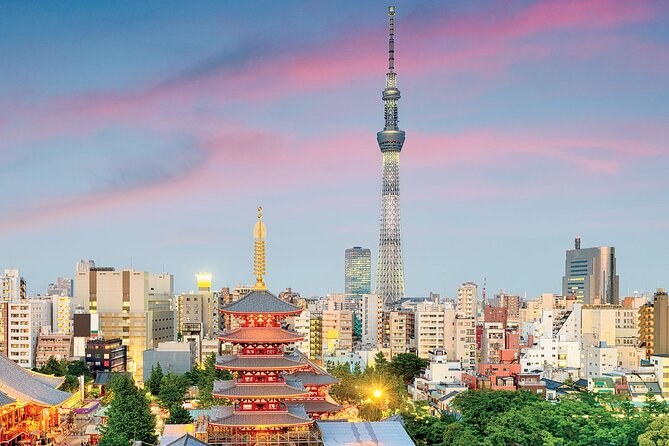
The short answer. In Tokyo the sun sets as early as 4:28pm, from 29 November to 13 December, and as late as 7:01pm, from 24 June to 4 July. Japan has no daylight saving, so the evening moves slowly, a minute or two a day, and never jumps. For most Tokyo Night guided tours, what matters is the start time: from 7:30pm you begin after sunset in every month, while a 5pm or 5:30pm start begins in daylight for much of the year.
Sunrise and sunset, month by month
The table gives the National Astronomical Observatory of Japan's times for central Tokyo in 2026, on the local clock. The last column shows whether a 5:30pm start, the time the night photography walk sets off, falls before or after sunset on that day. Other years fall within a minute or so, so read the times as "about".
| Date | Sunrise | Sunset | A 5:30pm start |
|---|---|---|---|
| 15 January | 6:50am | 4:51pm | After sunset |
| 15 February | 6:28am | 5:22pm | After sunset |
| 15 March | 5:52am | 5:48pm | Before sunset |
| 15 April | 5:09am | 6:14pm | Before sunset |
| 15 May | 4:36am | 6:39pm | Before sunset |
| 15 June | 4:25am | 6:58pm | Before sunset |
| 24 June, latest sunset | 4:26am | 7:01pm | Before sunset |
| 15 July | 4:36am | 6:57pm | Before sunset |
| 15 August | 5:00am | 6:31pm | Before sunset |
| 15 September | 5:23am | 5:49pm | Before sunset |
| 15 October | 5:47am | 5:06pm | After sunset |
| 15 November | 6:16am | 4:35pm | After sunset |
| 29 November, earliest sunset | 6:30am | 4:28pm | After sunset |
| 15 December | 6:43am | 4:29pm | After sunset |
Across the year, sunset moves by 2 hours 33 minutes. The latest evenings are at the turn of June and July, the earliest in late November and early December. The sun then sets well before most people finish work, and the neon is on by the time you leave your hotel.
No clocks to change
Many countries move their clocks twice a year, and the dark jumps an hour overnight. Japan does not. The evening you plan in March is the evening you get, and a date's sunset time is the same from one year to the next within a minute or two. That makes Tokyo easy to plan for, as long as you know which part of the year you are in.
It also means summer evenings are shorter than you may expect. In mid-June the sun sets at 6:58pm, not after 9pm as it does further north in Europe. By the time you sit down to dinner, it is dusk.
Dusk after sunset
The sky does not go black the moment the sun sets. For a while it stays deep blue, and the lit towers stand out against it. That is the light photographers wait for. The observatory's table gives sunset, not the end of twilight, so the safe rule is simple: be out from sunset, and you catch the blue sky and then the dark.
This is where a 5:30pm start works in your favour in the warmer months. You set off in daylight, walk into dusk and reach the neon of the busiest districts as it takes over. In winter the same start is already after dark, and the whole walk is lit.
What a 5:30pm start looks like in June and in December
The night photography walk from Shinjuku meets at 5:30pm all year. It is before sunset from 24 February to 27 September, and after it for the rest of the year. In mid-June the sun sets at 6:58pm, so the first hour and a half is daylight and dusk, and you reach the Shibuya scramble in the dark.
In mid-December the sun sets at 4:29pm. By 5:30pm it has been down for about an hour, and every stop on the walk is after dark. It is also cold: the average December low in Tokyo is 4°C (39°F), so wear a coat.
The 5pm dinner and the 7pm drives
- 5:00pm. The A5 wagyu dinner in Ginza starts before sunset from 25 January to 19 October. You arrive in daylight for much of the year and leave in the dark.
- 7:00pm. The five-hour drive from Shibuya and car-meet drives from Shibuya start at 7pm. That is after sunset every day except from 24 June to 4 July, when it is a minute or so before.
- 8:00pm and later. The Roppongi pub crawl, and the car-meet drives that start at 8pm or 8:30pm, are after dark all year.
- No time published. Some evenings, like the Ueno taverns and ramen crawl, show their start only when you pick a date. Check it against the table.
Every kind of evening, with its start, is compared on the night tour options page.
Which season suits which evening
- June and July: light until about 7pm, and the rainy season, which normally runs from about 7 June to about 19 July. Book a start from 7:30pm if you want the dark.
- August: the hottest month, with an average high of 31°C (88°F). Evening walks feel warm long after sunset.
- October and November: dark before 5:30pm from late September, and lows of 15°C (59°F) to 9°C (48°F). The easiest months for a night out on foot.
- December to February: sunset between 4:28pm and about 5:30pm, and cold, with January lows of 1°C (34°F). A 5:30pm start is after sunset until late February.
- March to May: the evenings lengthen fast. A 5:30pm start moves from dusk in late February to daylight by April.
What stays lit and open after dark
A tour is only part of the evening. Tokyo Tower is lit from sunset to 22:00, and its Main Deck is open until 23:00. Tokyo Skytree's decks close at 22:00, with last entry at 21:00. The south observatory at the Metropolitan Government Building is free and open until 22:00. Senso-ji in Asakusa is lit from sunset to about 23:00. Each is set out, with its hours, on Tokyo Night attractions, and more ideas are on things to do at night.
Before you book
Check three things against your date. The sunset, in the table above. The temperature and the rain, on the weather page. And the meeting point, on the meeting-point map, so you know how long it takes you to get there from your hotel.
If you only have one evening, let the month choose for you. In summer, pick a start from 7:30pm, or enjoy a 5:30pm start for the dusk. In winter, any evening start is dark, and you can add an early dinner before it.
Evenings that start on the clock you want
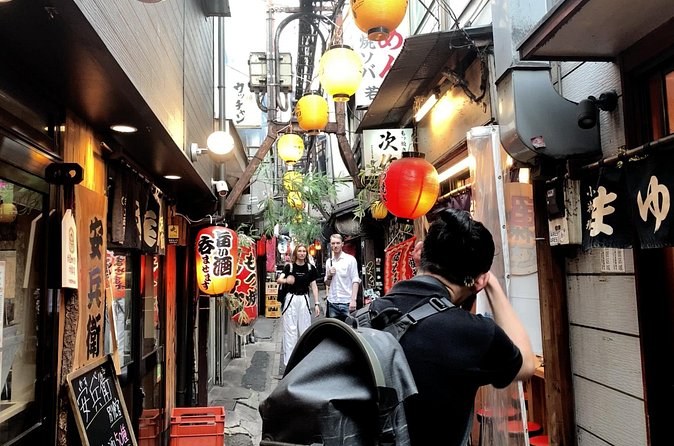
Tokyo by Night Photography Tour (Private Option Available)
Two to two and a half hours on foot from the Lion statue at Shinjuku East Exit at 5:30pm, through Kabukicho to the Shibuya scramble. A photographer shoots you; 20 edited photos follow.
From $117 per person
Check Availability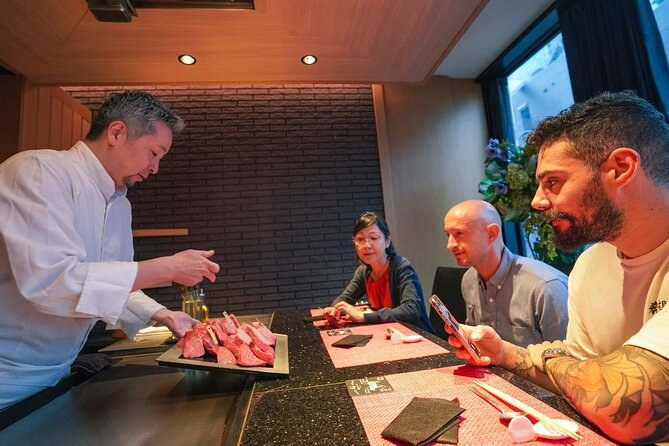
Ginza VIP A5 Rank Wagyu Tour: All-You-Can-Eat Wagyu &Sake Tasting
A 5:00pm start at Shimbashi Station's North Exit, then sake and all-you-can-eat A5 wagyu at a table in Ginza. Not for vegetarians, and not for children under six.
From $214 per person
Check Availability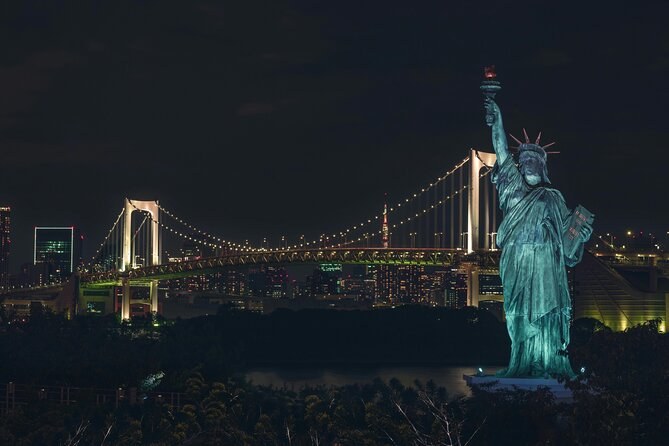
Tokyo After Dark Scenic Night Tour
Five hours by car from a 7:00pm pickup at your address or in Shibuya, with half an hour at each of five lit stops. A photo-and-sights evening; the deck tickets are extra.
From $195 per person
Check AvailabilityNext: Pick your month from the table, then choose the start time that gives you the light you came for. Every fare sits side by side on Tokyo Night Tours.