★★★★★
A photographer and a guide in one, and a surprising amount of ground covered in two hours.
Brandon_H · Couples · May 2026
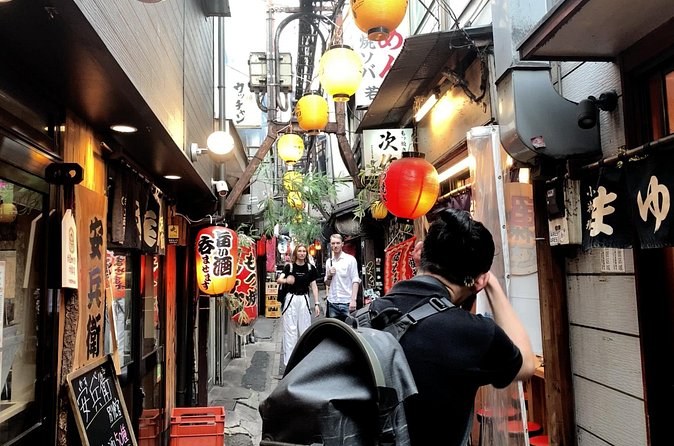
Two to two and a half hours on foot with a photographer who is also your guide. You meet at 5:30pm outside Shinjuku Station, walk the neon streets and the alleys of Kabukicho, then take the train to Shibuya Crossing. You are the one in the pictures, and 20 edited photos come to you afterwards.
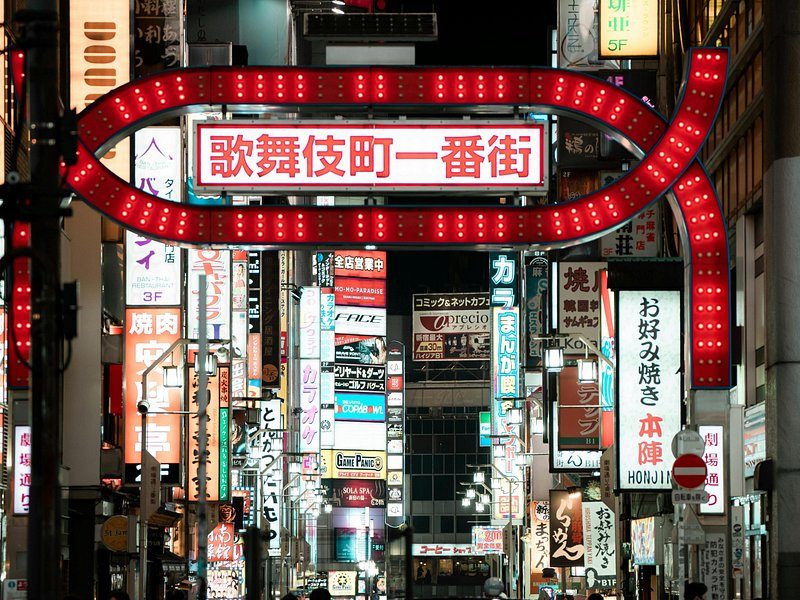
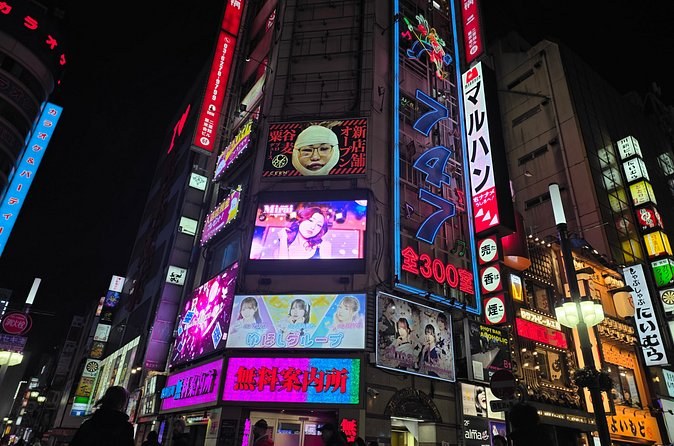
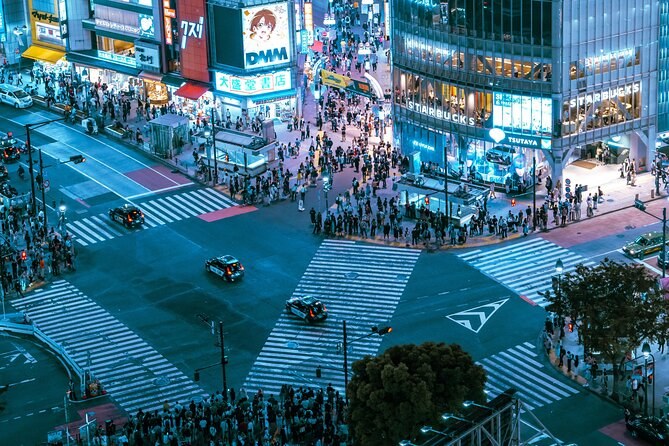
The photographer-guide, 20 edited photos and one drink are in the fare.
A perfect score, and travellers name their photographer in almost every review.
Or book the private option for your party alone, at the same from-price.
Before sunset for much of the year, so you walk from dusk into the neon.
From Shinjuku to Shibuya, with a short train ride in the middle.
The photographer shoots you; bring your own only if you want to take pictures too.
You meet at the Lion statue, a minute's walk from the East Exit of JR Shinjuku Station. Be there at 5:20pm, ten minutes before the start. The tour leaves on time, and if you arrive more than 15 minutes after that meeting time, you cannot join, change your date or get a refund. Shinjuku Station has many exits, so allow time to find the East Exit.
The group is six at most, and there may be other travellers with you. If you want the evening to yourselves, the private option costs the same from-price per person. The exit, and every other start point, is on the meeting-point map.
The walk starts on the west side, among the office towers and the lit streets of Nishi-Shinjuku, then crosses to Kabukicho, the entertainment district, for about half an hour. Your photographer picks the spots and the angles and tells you where to stand. You do not need to know how to pose; travellers say the direction is relaxed, and the results look natural.
You also get the district itself: the stories behind the streets, where to eat, and what to come back for. One couple wrote that they saw a surprising amount in two hours. What else is lit after dark nearby is on things to do at night.
You spend about 15 minutes in Golden Gai, a few lanes of tiny bars, some with room for only a handful of people. Here the rules change. Photography is strictly prohibited in parts of Golden Gai and of Omoide Yokocho, the lane of food stalls by the tracks, and the operator asks you to respect it. Your photographer knows where the camera can come out and where it cannot.
That is worth knowing before you go back alone. The bars are small, and they are people's places of work, not a backdrop. Your one drink in the fare comes during the walk. The lanes and the rules are on what to expect after dark.
From Shinjuku you ride the train to Shibuya with your guide. The fare for that ride is not included, so keep an IC card or some coins handy; you do not pay for your guide's ticket or drink. The last stop is Shibuya Crossing, for about 40 minutes: the scramble from street level, the lit screens overhead and the crowds crossing in every direction.
The walk ends there, in Shibuya, not back at the Lion statue. That leaves you in one of the best districts in the city to eat, with several lines home. The rooftop deck above the crossing, and its evening hours, is on Tokyo Night attractions.
The photographer shoots you all evening and edits 20 of the photos. They come by email after the tour, and travellers say they arrived quickly. The style leans into the neon, and one mother of two teenage daughters wrote that the girls loved how edgy the pictures looked.
If you do not like being photographed, this is not your evening; one traveller said exactly that. A plain guided walk, with no camera pointed at you, suits you better. You can bring your own camera too: no camera is needed, but the stops are good ones for your own shots.
The start is fixed at 5:30pm, but sunset in Tokyo is not. Japan has no daylight saving, and the sun sets from 4:28pm in early December to 7:01pm at the turn of June and July. So a 5:30pm start is before sunset from 24 February to 27 September, and after it for the rest of the year. In summer you start in daylight, walk through dusk and reach Shibuya in the dark.
| Month | Sunset on the 15th | At 5:30pm |
|---|---|---|
| January | 4:51pm | After sunset |
| February | 5:22pm | After sunset |
| March | 5:48pm | Before sunset |
| April | 6:14pm | Before sunset |
| May | 6:39pm | Before sunset |
| June | 6:58pm | Before sunset |
| July | 6:57pm | Before sunset |
| August | 6:31pm | Before sunset |
| September | 5:49pm | Before sunset |
| October | 5:06pm | After sunset |
| November | 4:35pm | After sunset |
| December | 4:29pm | After sunset |
Times are the National Astronomical Observatory of Japan's for central Tokyo in 2026. For the full neon from the first step, go between October and February. In summer the evening light is softer, and the city lights come on as you walk. The heat is the harder part in July and August; month-by-month evening temperatures are on Tokyo weather at night.
★★★★★
A photographer and a guide in one, and a surprising amount of ground covered in two hours.
Brandon_H · Couples · May 2026
★★★★★
Lots of tips along the way; wear comfortable shoes, and skip it if you would rather not be photographed.
Sofia_U · Solo · May 2026
★★★★★
Got lost and arrived a few minutes late, which was taken kindly, and the photos arrived by email very quickly.
smzg356 · Couples · June 2026
Check the evenings still open for your party, with a full refund up to 24 hours ahead.
Check availability